









After years in the construction industry, Dee was faced with a hand injury forcing her to make a career change. Dee didn’t just want a job; she wanted another long and fulfilling career. Her WCB case manager, Michelle, and her Lifemark re-employment services specialist, Sandra, shared this vision for Dee. With their help, Dee discovered a passion in a completely new field: supporting youth and families within her Indigenous community.
“I have Indigenous heritage. My Blackfoot name is ‘Painted Inside’ and I am from the Blood Tribe,” she says. As she considered a new career path, Dee was inspired to help people in her community excel.
Recognizing her passion and potential, Dee, Sandra and Michelle worked together on facilitating Dee’s career transition.
Going back to her roots to help others grow
With focus and determination—and guidance from her re-employment services team—Dee completed an Addictions and Community Health Professional diploma at Sundance College in 2023. She furthered her education with a certificate in Aboriginal Family and Youth Support from the RIEL Institute in June 2024.
“Dee was motivated and worked very hard in her academic plan,” says Michelle. “I am a huge fan of our training-on-the-job (TOJ) program, and thought it would be a great match to help Dee build her skills and confidence in a new career while providing support for her new employer.”
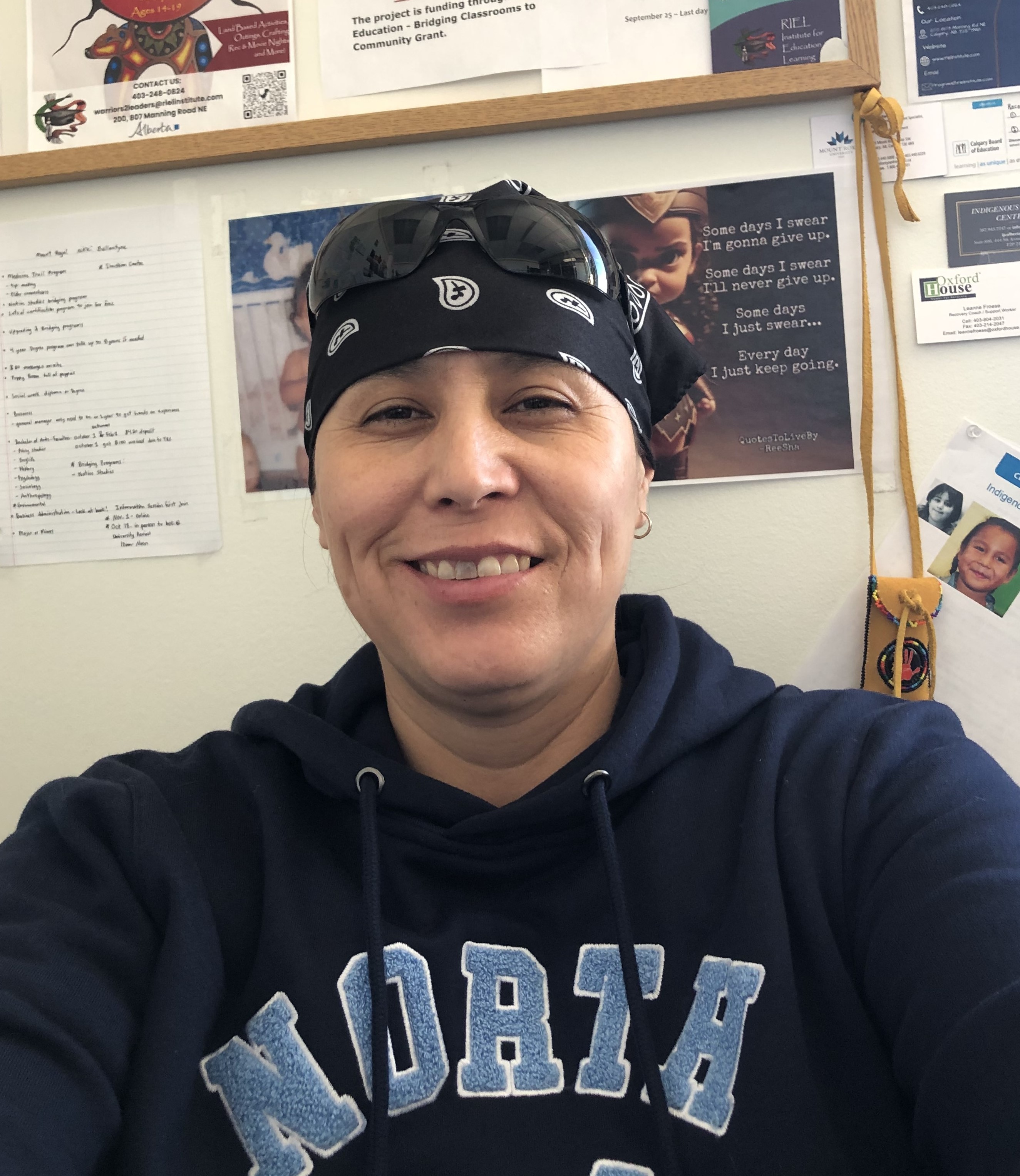
With her education complete, it was time to dust off her résumé and start looking for work. Capturing her knowledge, experience and passion on paper wasn’t easy, but Dee summed it up nicely in her résumé’s opening statement.
“Oki niisto nitaniko iitsipstpoihksaki Kainaiwa sohkiitapi nohtotsitapi,” she wrote, which translates to, “Hello. My spirit is happy to see your spirit. I am from the Blood Tribe. We’re of the Blackfoot Confederacy.”
“I am a new graduate with many excellent qualities in leadership, team collaboration and exceptional interpersonal skills,” she continued. “My ambition has gained me 20+ years of consistent work experience with people in the trades.”
Dee’s passion for human connection impressed the executive director of the RIEL Institute so much that she was offered a role as project coordinator for Indigenous youth.
After she landed the job, Dee and the Lifemark staff met with Dee’s leader at the RIEL Institute to discuss support through the TOJ program. This conversation covered accommodations for her ongoing physiotherapy and supports she could benefit from, including the use of voice recognition technology.
Although Dee was unable to return to her long-time career in construction, her drive, work experience, recent academic achievements and passion for community laid the foundation for a bright future.
Now Dee enjoys her new career making a direct community impact, while sharing her culture and teachings with everyone she meets.
Iikaakiimaat is a Blackfoot word that means “try hard and find inner strength.” Dee has embodied that, overcome many obstacles and persevered. Congratulations, Dee—isstsáákatsisa!
Find other stories like this
Read more success stories like Dee’s and learn how you can use the TOJ program to support a worker and be part of someone else’s success story.Resources
-
Your responsibilities
Learn more about the responsibilities for workers. -
Working while you recover
Workers and employers can plan ahead and work together to identify safe return-to-work options. -
Staying active and achieving the best recovery
Learn about how you can be active during your claim.

